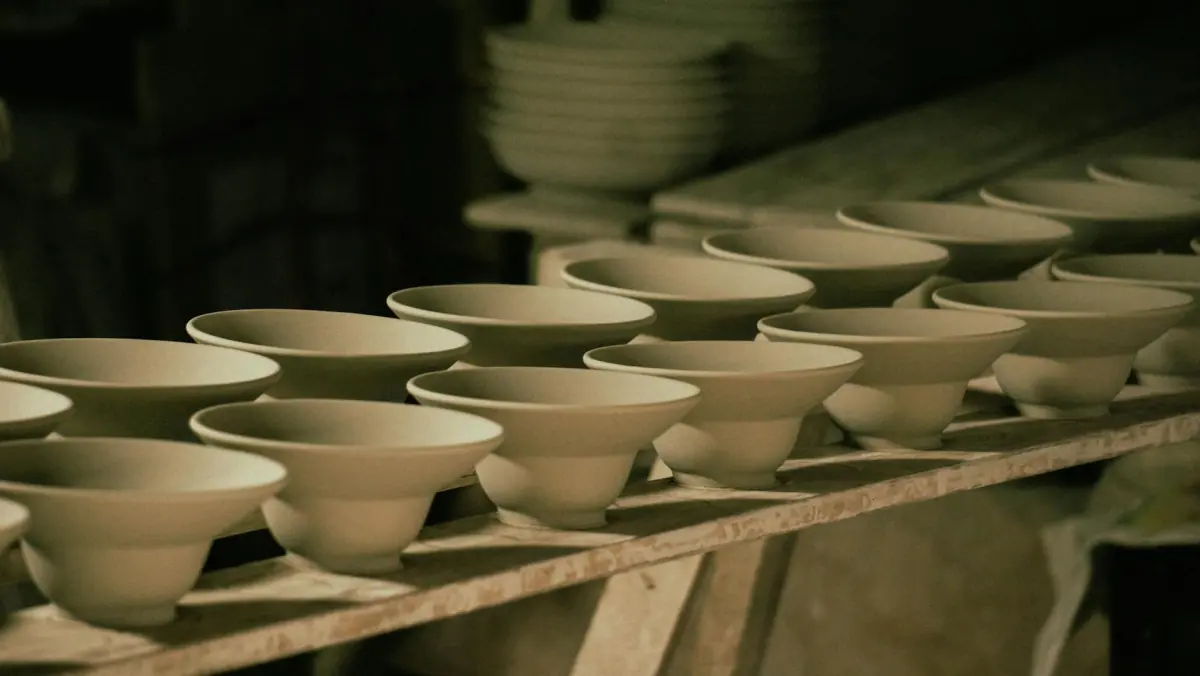
South African ceramics have moved into a more interesting place than the old split between useful vessel and decorative object. What is emerging now is something more sculptural, more considered, and more alive: clay forms that behave like small pieces of architecture, quiet table objects, or one-off artworks that happen to sit beautifully on a shelf. That shift matters because it changes how you buy ceramics. You are no longer only looking for a mug, a bowl, or a vase. You are looking for form, surface, balance, and the kind of object that can hold a room without trying too hard.
For anyone who pays attention to interiors, that is good news. The best contemporary ceramic pieces now do what the most compelling decor always does: they add texture, light, and a sense of thoughtfulness to a space. In a market full of mass-produced accessories, sculptural ceramics feel slower and more personal. They often carry the marks of the maker in a way that makes them feel alive, and that is part of the appeal. They can warm up a pared-back room, sharpen an eclectic one, or bring an unexpected edge to a minimalist interior.
What makes the South African scene especially worth watching is that it is not simply copying global decor trends. The work often draws on local clay traditions, landscape references, coastal and inland colour palettes, and an instinct for material honesty that gives the pieces real character. Some artists lean into coarse surfaces and rugged forms. Others work with softer lines, looped silhouettes, and almost architectural restraint. The result is a scene that feels varied rather than singular, and that variety is exactly what gives it discovery value.
The Shift From Vessel to Object
Traditionally, ceramics were judged by function first. Could it hold water? Was it balanced in the hand? Did it pour well? Those questions still matter, but they are no longer the whole story. Many of the most interesting South African ceramic designers are making objects that sit somewhere between vessel, sculpture, and interior accent. Some are intentionally non-functional. Others are functional in theory but so expressive in shape that they read more like art than utility.
This shift is important because it reflects a broader change in how people furnish their homes. A good room is not just filled; it is edited. One ceramic object with strong form can do the work of several generic accessories. It can create a focal point on a sideboard, bring weight to a console, or soften a sharp modern interior with something tactile and handmade. That is why sculptural ceramics have become so visible in design-led homes: they are compact, but they carry a lot of visual power.
There is also a growing appetite for objects that feel collectible rather than disposable. Ceramics lend themselves to that because each piece is slightly different. Glazes behave unpredictably. Handbuilding leaves subtle variation. Even pieces made in small runs tend to have a human irregularity that adds interest. In a culture that increasingly values individuality over sameness, that matters.
What Makes Sculptural Ceramics Stand Out
Sculptural ceramics are not defined by size alone. A small object can be sculptural if it has tension, rhythm, or an unexpected silhouette. A larger piece can still feel flat if it lacks presence. The strongest works tend to share a few qualities: a clear formal idea, a confident relationship between volume and emptiness, and a surface treatment that supports the shape rather than distracting from it.
In South African work, texture often plays a major role. Some pieces are matte and stone-like, with a raw finish that highlights the material. Others are glazed in ways that emphasize depth, pooling, or subtle shifts in tone. The most memorable pieces often make you want to look at them twice. They reveal something different depending on the light, the angle, or the surrounding furniture. That kind of responsiveness is why they work so well in interiors. They do not just sit there; they change the mood of the room around them.
Another reason sculptural ceramics stand out is that they bridge art and design without feeling forced. A gallery piece can be beautiful but too remote for everyday life. A purely functional object can be practical but visually forgettable. Ceramic designers working at the edge of sculpture solve that tension. They make objects that are useful enough to live with, but distinctive enough to deserve attention. That balance is rare, and it is exactly what makes the category so appealing to people who want decor with taste and personality.
Why South African Ceramic Designers Are Getting Attention
There is a strong sense that South African ceramics are in the middle of a creative renaissance. Galleries, collectors, and design-focused retailers are increasingly treating ceramic work as something to be collected, not just used. That change in status has opened up space for emerging designers to experiment more boldly. Instead of producing safe, uniform functional ware, many are now exploring more expressive forms, larger scale, and conceptual ideas rooted in clay’s material possibilities.
The scene is also benefiting from a broader global appetite for work that feels handmade and culturally specific. International audiences are increasingly interested in objects that tell a story and carry evidence of place. South African ceramicists are well positioned for that moment because their work often combines contemporary form with local sensibility. It can feel modern without being generic, and rooted without being nostalgic.
For local buyers, the appeal is even more direct. Buying ceramics from emerging designers offers a way to bring something original into your home while supporting artists whose practices are still developing. That usually means better access to distinctive pieces, more chance of discovering something early, and the satisfaction of owning an object that was made with intention. If you care about the difference between filling a space and curating one, this is a category worth paying attention to.
How to Read the Work Like a Collector
You do not need to be an expert to look at contemporary ceramics with a more informed eye. Start with the silhouette. Is the form calm, compressed, stretched, angular, or organic? Does it feel grounded or suspended? Then look at proportion. Some of the most successful pieces create interest through imbalance: a narrow neck on a broad body, a thick lip on a delicate base, or an asymmetrical profile that refuses to be conventional.
After that, pay attention to surface. A glaze is not just colour; it is part of the object’s character. A rough finish can make a piece feel earthy and tactile. A glossy one can shift it toward polish and reflection. Some ceramic designers deliberately leave evidence of the hand-building process visible. That is not a flaw. It is a design choice, and often the thing that makes the work compelling.
It also helps to consider whether the piece is meant to be used, displayed, or both. A sculptural bowl might work beautifully on a dining table even if it never holds fruit. A vase may be too expressive to need flowers. A cluster of smaller objects can become a quiet composition on a shelf or coffee table. Thinking this way helps you buy with more precision. You are not just asking, “Do I like it?” You are asking, “What job will it do in my space?”
Who These Pieces Suit
These ceramics suit people who want their homes to feel edited rather than overdecorated. They are ideal for anyone who likes interiors with a strong point of view but not too much noise. If your home already leans toward neutral tones, timber, linen, stone, or brushed metal, sculptural ceramics can add depth without clutter. If your space is more layered and collected, they can serve as a visual pause between busier elements.
They are also a good fit for buyers who value objects with story. Handmade ceramics carry the sense that someone made decisions while making them, rather than a machine repeating a template. That is particularly attractive for gifting. A ceramic piece can feel more personal than a candle, more lasting than flowers, and more interesting than generic homeware. For anniversaries, housewarmings, or milestone gifts, it has the right mix of usefulness and character.
There is another audience too: people who want to start collecting but do not know where to begin. Ceramics are a practical entry point into collecting because they can be comparatively accessible, especially when you are looking at emerging talent. You do not need to build an entire collection at once. One good piece can teach you what you respond to: minimal forms, rough textures, heavier masses, or more fluid lines. From there, the collecting instinct becomes easier to trust.
How to Style Sculptural Ceramics at Home
The easiest way to style sculptural ceramics is to give them room. They need breathing space to do their best work. One strong vessel on a narrow console often looks better than several smaller accessories clustered together. On a shelf, a ceramic object can be paired with books or a framed print, but it should still have enough visual space to hold its own.
Scale matters. A small ceramic piece can be powerful if it is placed deliberately, but it can also disappear if it is surrounded by too much visual competition. Larger works are excellent for entryways, sideboards, and dining rooms, where their silhouette can be appreciated from a distance. If you are using several pieces together, vary their heights and profiles so they read like a composition rather than a row of matching items.
Colour also matters, but not in a rigid way. Neutral ceramics work beautifully in rooms with a restrained palette because they add texture without overpowering the scheme. Richer glazes can be used as accents, especially if they echo a tone already present elsewhere in the room. The best approach is usually to let the ceramic piece speak before adding anything else. If it already feels complete, it probably does not need much around it.
Where the Excitement Is Headed
The most interesting part of this moment is that it still feels open. South African ceramic design is not locked into one style, one market, or one aesthetic language. There is room for rough and refined, functional and non-functional, domestic and gallery-facing. That openness allows emerging designers to push further, and it gives buyers a genuine sense of discovery when they come across a piece that feels unlike anything else in the room.
As the category grows, the temptation will be to flatten it into a trend. That would be a mistake. The real value of these ceramics is not that they are fashionable, but that they offer a durable kind of distinctiveness. A sculptural ceramic object does not need to shout to make a point. It simply needs to be well made, formally confident, and visually alive. When it is, it can outlast trend cycles because it is doing something more fundamental: giving shape to taste.
For anyone building a home with care, that makes emerging South African ceramic designers especially worth watching. They are making objects that are thoughtful without being precious, artistic without being inaccessible, and decorative without feeling generic. In a crowded design landscape, that combination is rare. It is also exactly why the sculptural side of the clay scene deserves a place on your radar.