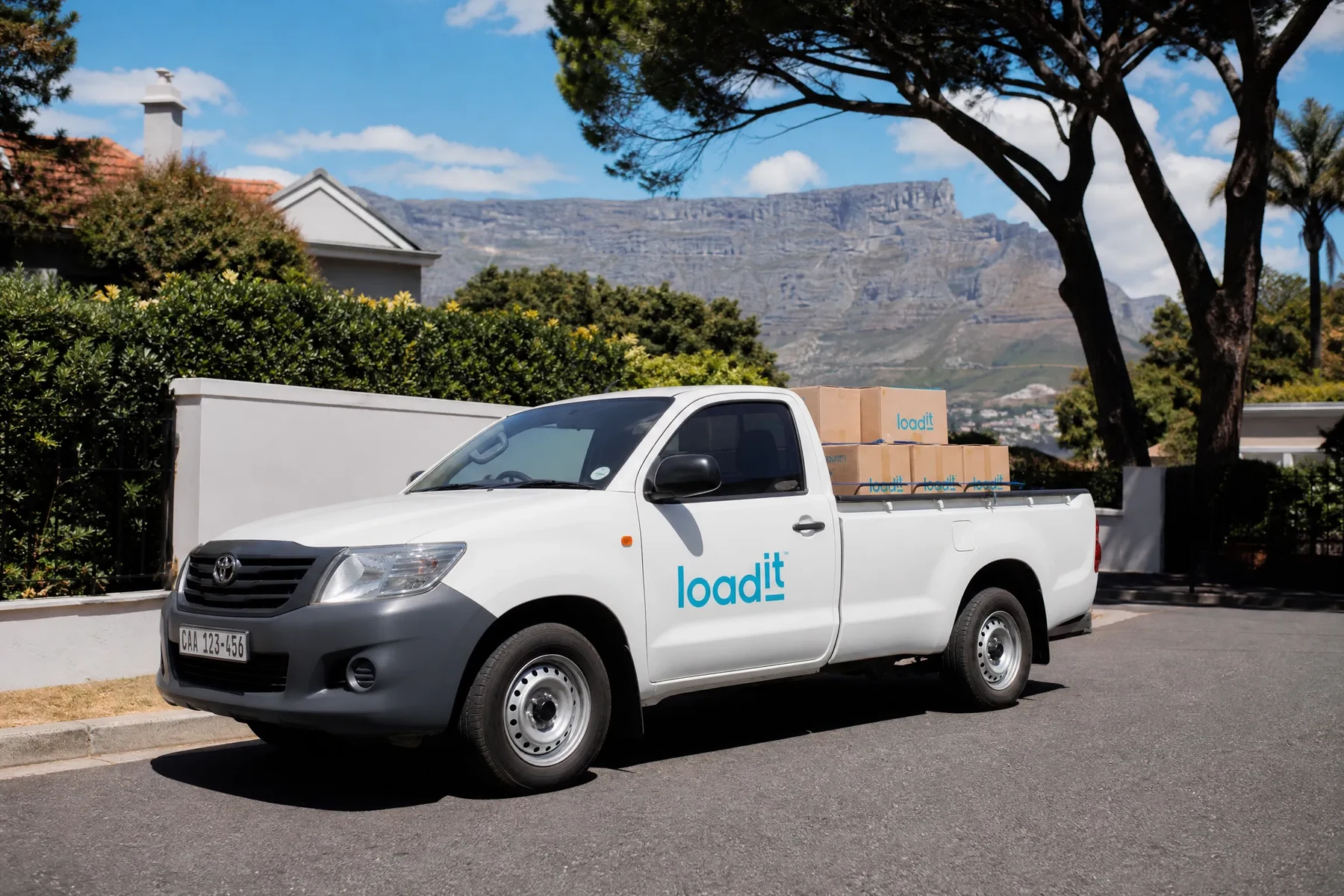
South Africa has plenty of ways to move a couch. Most of them involve a favour, a sore back, and a neighbour who suddenly remembers he has a meeting. Loadit has built its whole pitch around removing that chaos, and the idea is simple enough to explain in one breath: book a bakkie or truck when you need it, match it to the load, and get the job done without pretending you run a logistics company.
The category sounds mundane until you look at how often people need it. A fridge bought on Facebook Marketplace. A student move from a flat in Randburg. A branch office in Sandton shifting desks and printers. A same-day collection from a supplier in Cape Town. Loadit sits in the gap between expensive full-service movers and the informal scramble that usually passes for transport in this country, and that is exactly where the money and the irritation live.
The model
Loadit operates as an on-demand truck and bakkie platform, which is a neater way of saying you can order the vehicle size you need instead of paying for the kind you do not. The company has been around since May 2017, works with approved small operators, and says it has handled more than 40,000 trips. It also carries a 4.9-star Google rating from 1,944 reviews, which is the sort of number that matters more than any glossy marketing line.
The practical appeal is obvious. A customer does not need to own a bakkie, hire a whole moving crew, or commit to a fixed removal package when the job is just one couch, two beds, or a washing machine from a seller in Fourways. For those looking for a trusted partner for moving and truck rental needs, Loadit sells itself as the cleaner, less theatrical option.
Loadit also behaves more like a logistics tool than a traditional removals company. The platform handles single-item transport, full household moves, office relocations, storage runs, and urgent business collections. It is built for the kind of work that usually gets solved through WhatsApp groups and crossed fingers.
The vehicles and the job
Loadit does not force every task into the same box, which is where a lot of moving businesses fall apart. The fleet ranges from 1/2 Ton bakkies, including NP200-type vehicles, through 1 Ton bakkies, then up to 1 Ton, 1.5 Ton, 3 Ton, and 8 Ton trucks. That range matters because the wrong vehicle costs time, money, and more than a little embarrassment at the kerb.
Vehicle and service mix
- 1/2 Ton bakkies for small loads, appliances, and single furniture items
- 1 Ton bakkies for heavier short-haul work
- 1 Ton, 1.5 Ton, 3 Ton, and 8 Ton trucks for larger home, office, and commercial moves
- Driver-only bookings, or driver plus one helper, or driver plus multiple helpers
- Loading, offloading, stairs assistance, and heavy lifting options
The service menu is broad enough to cover household removals, apartment moves, townhouse moves, student accommodation, retirement village relocations, and storage unit transfers. On the business side, Loadit covers customer deliveries, supplier collections, stock transfers, warehouse movements, branch deliveries, retail drops, and multi-stop routes. The platform even leans into the awkward jobs that traditional movers would rather not quote, such as Facebook Marketplace pickups, Gumtree purchases, and store-to-door furniture deliveries.
The logic is blunt. If the load is too small for a full removals quote and too awkward for a regular courier, Loadit is aiming to be the obvious answer.
Where it works
Loadit’s footprint is concentrated where the jobs are thickest. In Gauteng, that means Johannesburg, Pretoria, Centurion, Midrand, Randburg, Sandton, and Roodepoort. In the Western Cape, it serves Cape Town, the Southern Suburbs, the Northern Suburbs, and the Atlantic Seaboard. In KwaZulu-Natal, Durban and surrounding areas are on the map as well.
That spread matters because the service only works if it can be used in the places where South Africans actually move, buy, sell, and restock. The platform is especially relevant in Gauteng, where house moves, office relocations, and last-minute retail collections happen at a pace that punishes anyone trying to do everything manually.
The business side
Loadit is not just selling lifts for couches. The company has built two business products around recurring delivery work.
LOADIT ESSENTIAL is aimed at ad-hoc or emergency jobs. It runs 24/7, supports self-booking online, includes vehicle access with drivers and helpers, offers goods cover subject to terms, and sends SMS delivery updates. It also supports PODs, invoice reconciliation, real-time tracking, and multiple users per account on request. That is useful if you are a retailer, an SME, or a company that gets calls from customers who believe “can you just send it now” is a logistics plan.
LOADIT PRO is the more structured option. It is built for businesses with frequent deliveries, custom routing, and scheduled runs. Loadit staff handle planning and scheduling, and the package adds a dedicated account manager, flexible terms, warehouse storage, CPT-JHB long-haul transport on request, consolidated trips, and BBBEE points on request. The company says its routing can reduce costs by up to 40 percent, which is a bold number, but the appeal is easy to understand when fuel, labour, and empty return trips are all sitting in the same invoice.
Who trusts it
Loadit’s proof points lean hard on volume. The brand says it has completed over 40,000 trips and works with more than 1,000 businesses. Its testimonials include names like Granadilla, Sunbird, Trust Solar, and Zorora, which gives the service more weight than a generic “we move things fast” claim ever could.
The review language is also telling. People do not rave about logistics unless the alternative was pain. Loadit’s customers keep coming back to the same things, friendly crews, efficient service, safe delivery, and the fact that the process does not require a dissertation in product lists and paperwork. For home customers, property managers, estate agents, stores, and event teams, that ease is the product.
Loadit is interesting because it understands something most transport companies miss. South Africans do not only need moving trucks when they are changing houses. They need them when they are buying one fridge, clearing a storage unit, restocking a shop, or getting a sofa across town before the seller changes their mind. That is a very different market, and Loadit has built a platform around it instead of pretending everything is a full household relocation.